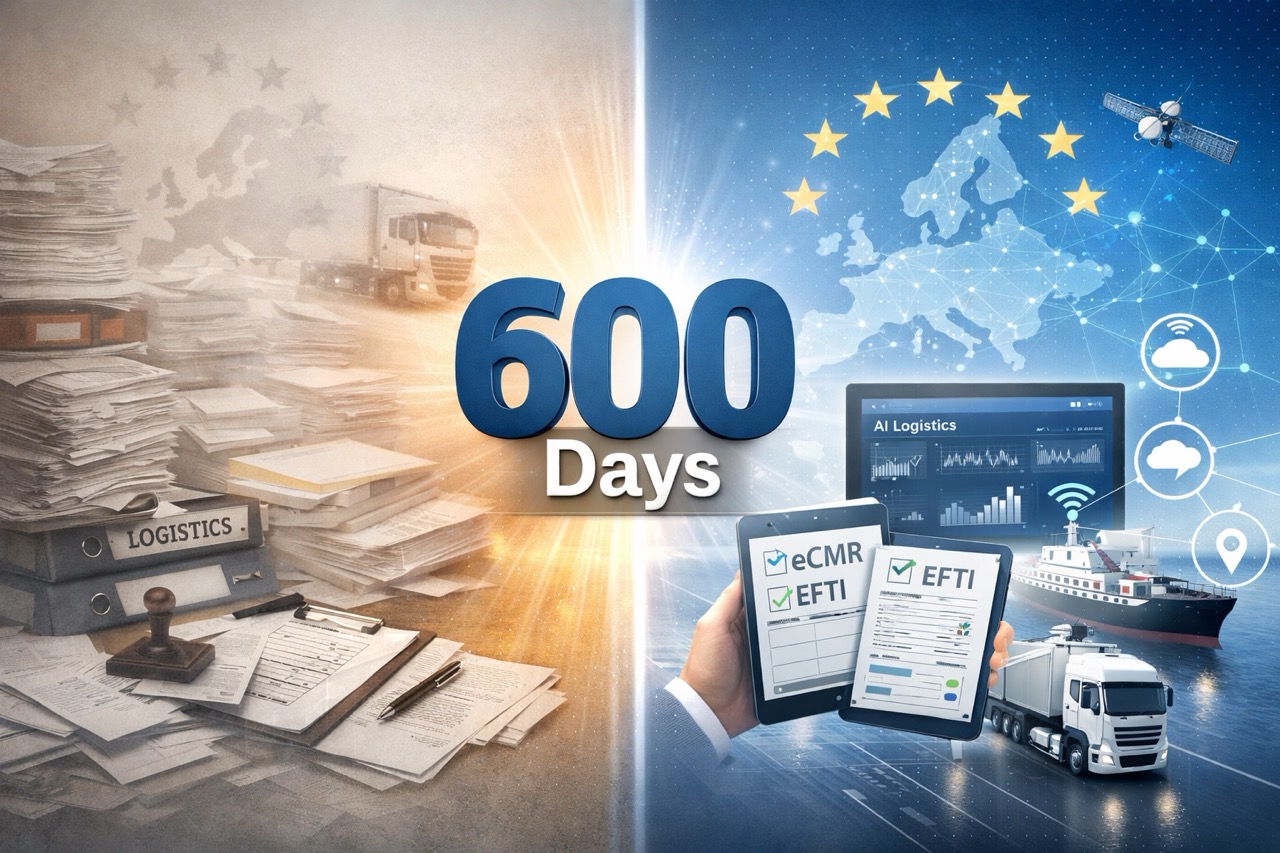
The Paper Era Ends: 600 Days to Digital Transformation in EU Freight Transport
600 Days to Digital Transformation
The freight transport and logistics sector stands on the brink of a historic shift – the end of paper documentation and the full embrace of digital freight data. Within the next 600 days, all EU member states will be required to accept freight transport documents in digital format under the eFTI Regulation, fundamentally changing how road transport data is exchanged, inspected, and verified across borders.
What’s Changing and Why It Matters
For decades, the industry has relied on paper-based documents – CMR consignment notes, phytosanitary and veterinary certificates, and other transport paperwork. Under the new Electronic Freight Transport Information (eFTI) framework, these traditional documents will no longer be necessary at enforcement points and checkpoints: digital data will be accepted as the authoritative compliance source.
This isn’t just about replacing paper with PDFs. It’s about standardising real-time, structured digital data exchange between carriers, forwarders, authorities, and inspection bodies. Operators will no longer have to hand over printed documents for roadside checks or cross-border controls – the data will flow directly from certified digital platforms.
600 Days to Prepare – What That Means for Logistics Players
The industry now faces a clear deadline: in about 600 days, all EU authorities must accept digital freight data as compliant documentation. Preparation isn’t optional – it’s strategic:
- Review current document flows: Map every touch point where paper documentation is used (CMRs, customs packs, certificates).
- Integrate digital documentation solutions: Certified platforms compliant with eFTI standards must be part of your TMS or partner ecosystem.
- Train operations and drivers: Digital inspection and compliance processes require different workflows than paper handling.
- Test interoperability: Ensure your digital documentation can be accessed and verified by different member states’ verification systems.
What’s at Stake
The implications span operational efficiency, compliance risk, and competitive positioning:
- Faster processing & lower costs: Digital acceptance eliminates physical handling, scanning, and redundant printing. Early adopters report substantial admin savings and faster border crossings.
- Reduced compliance risk: Structured data reduces errors and discrepancies that today cause fines or delays.
- Better visibility, better decisions: Real-time access to freight data across partners boosts end-to-end transparency.
- First-mover advantage: Operators that fully embrace digital compliance now will outperform competitors still reliant on hybrid or paper-heavy processes.
Where Traditional and Digital Meet
It’s important to clarify that eFTI doesn’t require new data – the same sets of information carriers already submit are now structured and transmitted digitally. The value comes from eliminating the manual, fragmented way logistics paperwork has historically been handled.
But industry adoption remains uneven. Many carriers continue to generate electronic documents yet still carry paper backups because even today not all inspection authorities are digitally equipped – a situation that will end once the eFTI deadline arrives.
CargoBridge.io’s Stance: Move Now, Lead Later
The upcoming eFTI compliance deadline isn’t just regulatory – it’s transformative. At CargoBridge.io, we see this as a milestone in freight logistics digitization:
- Operators should view digital freight documentation as foundational to future innovations like AI-driven exception handling, automated customs reporting, and predictive compliance.
- The 600-day window is short in logistics transformation terms. Early and decisive action will separate leaders from laggards.
- Platforms that seamlessly embed certified digital data flows will become the default backbone for transport execution and compliance.
Final Take
The paper era in European freight transport is ending – not softly, but deliberately. With about 600 days to full digital acceptance, now is the time to integrate, test, and operationalise digital documentation workflows. The companies that do this first won’t just comply – they will gain measurable efficiency, transparency, and resilience in a rapidly evolving market.