What eFTI Really Changes for Freight Forwarders (Not the Marketing)
The eFTI regulation is often presented as a clean, futuristic leap toward “paperless logistics”. In reality, it’s far less glamorous and far more operationally disruptive.
For freight forwarders, eFTI is not about adopting a shiny new platform or ticking a compliance box. It’s about rethinking how transport data is created, stored, shared, validated, and audited across borders. This article cuts through the marketing language and explains what eFTI actually changes in day-to-day forwarding operations.
What eFTI Is – and What It Is Not
The eFTI regulation establishes a legal framework that requires authorities in the EU to accept freight transport information in electronic form, provided it is shared through a certified eFTI platform.
What it is:
- A regulatory obligation for authorities to accept electronic transport data
- A push toward standardized, machine-readable freight data
- A compliance requirement that affects systems, not just documents
What it is not:
- A single EU-wide platform
- A mandatory replacement for all paper documents (yet)
- A plug-and-play software upgrade
The regulation applies across road, rail, inland waterways, and intermodal transport within the European Union.
The Real Operational Shift: From Documents to Data
Paper Documents Are the Symptom, Not the Problem
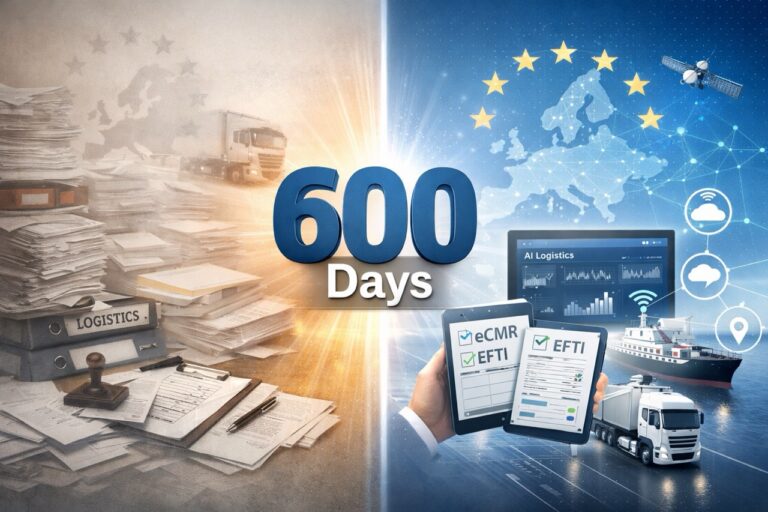
Most forwarders focus on eCMR or digital bills of lading when discussing eFTI. But the real change is deeper: authorities are no longer validating documents – they are validating data fields.
That means:
- Shipment data must be structured, not scanned
- Fields must be complete, consistent, and traceable
- Errors become systemic, not isolated
A wrong HS code or consignee address won’t just cause a delay – it can trigger compliance issues across multiple authorities.
System Readiness Becomes a Compliance Issue
Under eFTI, freight forwarders must ensure that:
- Data is stored in compliant formats
- Access rights can be granted instantly to inspectors
- Historical records are retrievable and auditable
This exposes a hard truth: many forwarding systems were designed for document storage, not regulatory data exchange.


Forwarders relying on:
- Email-based document exchange
- PDF-heavy workflows
- Manual rekeying between systems
…will struggle under eFTI enforcement.
Interoperability Is the Hidden Cost Driver
eFTI does not mandate which system you use – but it does require interoperability.
In practice, this means your systems must:
- Communicate with shippers, carriers, and authorities
- Support standardized data models
- Handle versioning and updates without breaking workflows
For mid-sized forwarders, this is where costs emerge:
- API development or middleware
- Data mapping between TMS, WMS, and finance tools
- Ongoing compliance updates as standards evolve
This is not a one-time IT project. It’s a continuous capability.
Liability Shifts Closer to the Forwarder
With paper documents, liability was often blurred:
- Driver carried the document
- Errors could be blamed on outdated paperwork
- Audits were slow and fragmented
With eFTI:
- Data accuracy is attributable
- Time stamps and access logs are auditable
- Authorities can cross-check instantly
This increases exposure for forwarders acting as:
- Contractual carriers
- Data aggregators
- Compliance intermediaries
Operational discipline becomes a legal safeguard.
What It Means in Practice (For Forwarders)
Here’s what freight forwarders should be doing now, not in 2027:
1. Audit Your Data, Not Your Documents
Identify:
- Where shipment data is created
- How often it is rekeyed
- Which fields are inconsistent
Fixing data quality delivers faster ROI than digitizing PDFs.
2. Separate Compliance Data From Commercial Data
Authorities don’t need your pricing or contracts but they do need clean transport data. Architect systems accordingly.
3. Choose Platforms for Longevity, Not Features
A compliant digital freight platform should prioritize:
- Standards alignment
- Interoperability
- Regulatory update cycles
UI features matter less than compliance resilience.
4. Train Operations Teams, Not Just IT
Dispatchers, documentation teams, and customer service staff must understand:
- Why structured data matters
- What errors create compliance risk
- How inspections will change
The Bottom Line
eFTI doesn’t make freight forwarding “digital.” It makes it accountable.
Forwarders who treat eFTI as a document digitization project will face friction, cost overruns, and compliance risk. Those who treat it as a data governance transformation will gain operational clarity, regulatory confidence, and long-term scalability.
The marketing version sells efficiency.
The operational reality demands discipline.
CTA
eFTI is not a future problem – it’s a structural shift already underway. Forwarders that modernize their data foundations today will navigate compliance with confidence tomorrow. CargoBridge supports forwarders in building practical, regulation-ready digital workflows – without disrupting daily operations.