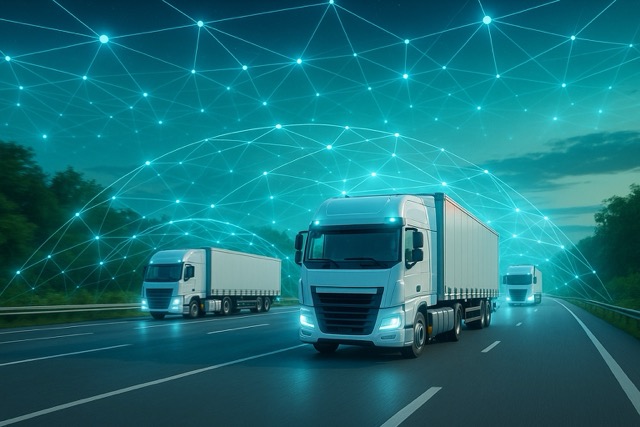
Multi-Modal eFTI: Solving the “Information Gap” Between Port and Pavement
In the complex corridors of European trade, the most dangerous place for your data isn’t a cyberattack, it’s the handoff. As freight moves from a container ship in Antwerp to a rail terminal in Duisburg, and finally onto a truck destined for a warehouse in Riga, the information often “breaks.” Documents are printed, stamped, scanned, and re-typed at every node. This “Information Gap” is where delays are born, customs fines are triggered, and supply chain visibility goes to die.
With the eFTI (Electronic Freight Transport Information) Regulation entering its critical implementation phase in 2026, the era of the “Paper Handoff” is officially coming to an end.
The Problem: The “Siloed” Journey
Traditionally, each mode of transport operates in its own digital (or paper) bubble:
- Maritime: Uses the EMSWe (European Maritime Single Window) standards.
- Rail: Relies on CIM/SMGS consignment notes.
- Road: Primarily uses paper CMR or early-stage eCMR.
When a load switches modes, the data often doesn’t follow. A truck driver arriving at a port might wait 4 hours simply because the “gate” doesn’t have the digital record of the container that was offloaded just 500 meters away. This lack of interoperability is estimated to cost the EU logistics sector over €1 billion annually in administrative waste.
The eFTI Solution: One Common Data Set (CDS)
The breakthrough of eFTI is the creation of a Common Data Set. Instead of trying to make a “Road document” work for a “Sea journey,” eFTI focuses on the Data Fields themselves.
By using the UN/CEFACT Multimodal Reference Data Model, eFTI-certified platforms like CargoBridge allow information to flow “across the gaps.” Whether the goods are on a barge, a train, or a truck, the core regulatory data, weight, dangerous goods codes, origin, and ownership, remains consistent and accessible to authorities through a single Unique Identifying Link (UIL).
Closing the Gap “Automagically”
At CargoBridge, we solve the multi-modal handoff by combining our Open-Source Core with our AI-powered Brain.
- Standardized Infrastructure: Because our core is open-source (AGPL 3.0), we natively support the EU-mandated data subsets for road, rail, and inland waterways. We don’t need a “translation layer”; we speak the language of the EU Gate natively.
- AI-Driven Continuity: When a container is released from a port, our AI “automagically” pairs that release note with the best available carrier in our marketplace. It pre-fills the eFTI record with the port’s data, so the truck driver doesn’t have to type a single character when they arrive at the pavement.
- Real-Time Authority Access: During an inspection, the driver simply shows a QR code. Whether the inspector is from a maritime port authority or a roadside police check, they see the same verified, up-to-date digital record.
The 2026 Competitive Advantage
For forwarders and shippers managing multimodal chains, the goal is no longer just “getting the goods there.” The goal is Data Continuity. By closing the information gap between the port and the pavement, companies are seeing:
- 20% faster terminal turn-times for their drivers.
- Zero “Missing Document” delays at border crossings.
- Complete Carbon Transparency: Because the data flows seamlessly, calculating the true CO2 footprint of a multimodal journey (Sea + Rail + Road) becomes a 1-click process.
The “Information Gap” is a choice. With an open, AI-driven platform, you can ensure your data travels as fast as your freight.